

Poured Walls
Poured Concrete Walls in Agricultural Construction
In modern agricultural construction, concrete is more than a building material — it’s the backbone of infrastructure built to withstand the test of time, heavy equipment, and the daily demands of production agriculture. At DairyLand Structures, poured-in-place concrete walls are a specialty service that combines efficiency, durability, and attention to detail. We will explore the processes, applications, and technical advantages of poured concrete walls as executed by DairyLand Structures — highlighting the methods, equipment, and craftsmanship that set the company apart in the agricultural construction industry.
Applications of Poured Concrete Walls
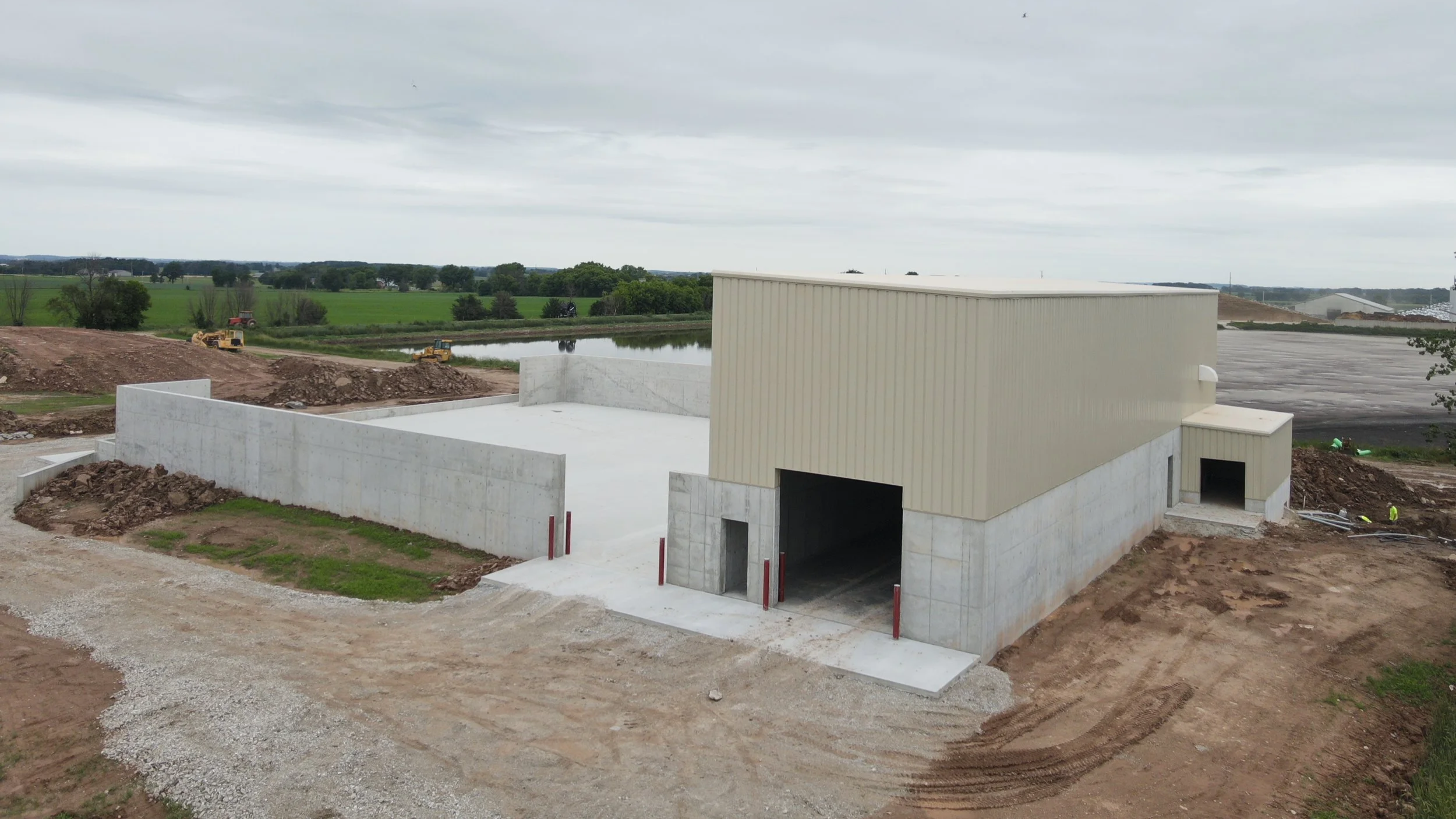
DairyLand Structures pours concrete walls for a wide range of agricultural uses, including:
Building foundations
Feed bunker walls
Digesters and manure processing systems
Commodity storage buildings
Retaining and push walls
Each of these applications requires a wall system capable of withstanding lateral pressure, equipment impact, moisture exposure, and chemical attack — all while remaining cost-effective and low maintenance. DairyLand’s poured wall systems are custom-built to meet each project's functional requirements and site conditions, offering unmatched versatility and long-term performance.
Wall Dimensions and Structural Design
DairyLand pours walls ranging in height from 2 feet up to 16 feet, with thickness and reinforcement tailored to each project’s structural design. Wall thickness and rebar spacing vary based on factors such as:
Load-bearing requirements
Soil and backfill pressure
Material containment (e.g., silage, manure, aggregate)
Environmental exposure
Reinforcement designs are engineered per project specs and can include single or double mats of steel, rebar dowels into footings or slabs, and tie-in systems for structural integration with existing concrete or steel components.
Forming, Pouring, and Vibration Practices
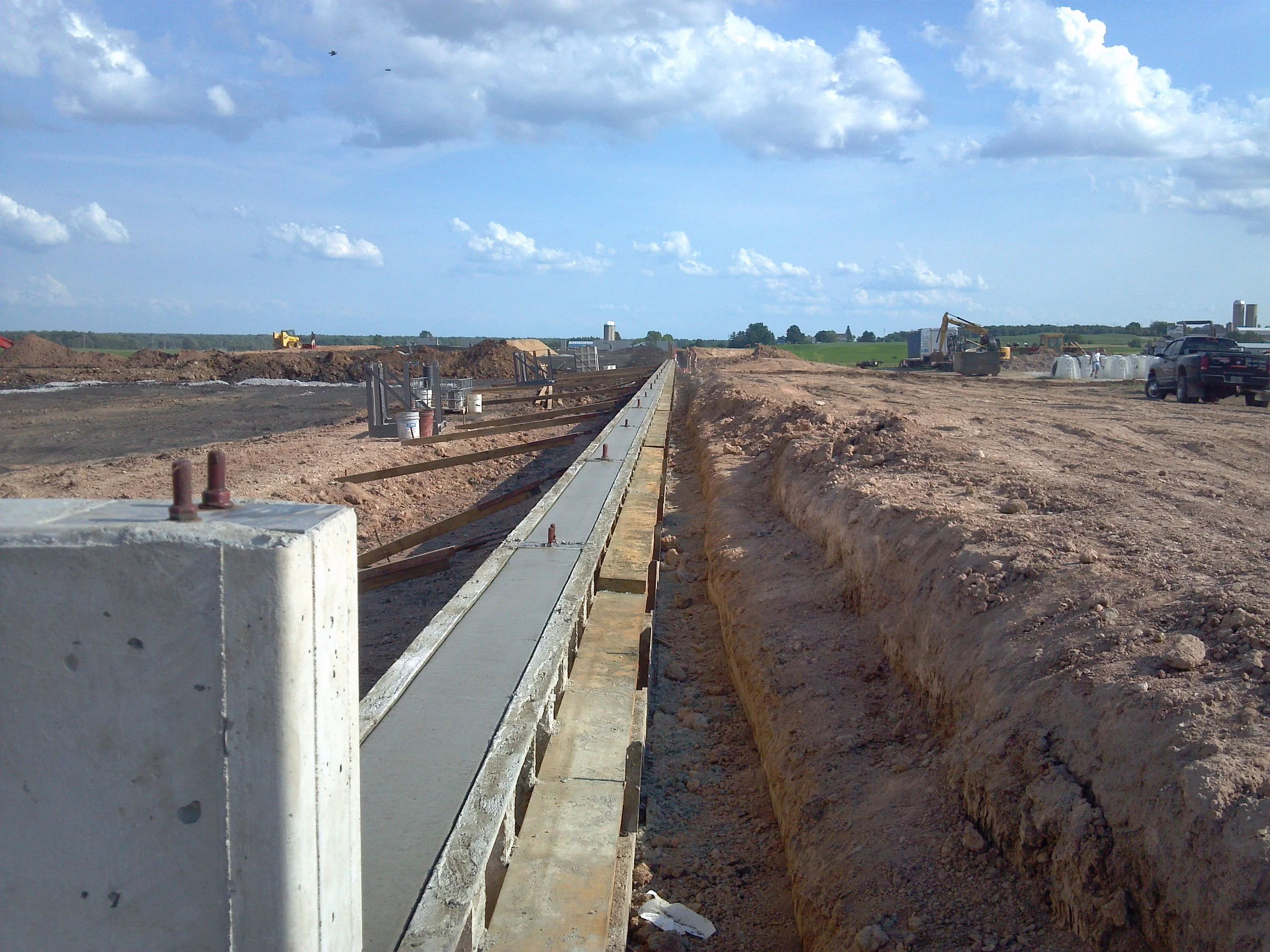
One of DairyLand’s key advantages lies in its use of gang set panel systems for forming walls. This approach significantly reduces labor costs and increases efficiency compared to traditional hand-set forming methods.
Gang forms allow for:
Faster setup and stripping
Consistent wall alignment and thickness
Fewer seams and tie holes
Greater precision on large-scale projects
DairyLand also owns and operates its own concrete pump, allowing for efficient placement with enhanced quality control. By pumping concrete directly into the forms, the team achieves:
Fewer surface imperfections such as air holes or honeycombing
Cleaner, smoother finishes
More consistent concrete flow, especially in taller or complex wall designs
Vibration Techniques
Proper consolidation of concrete is essential for strength, durability, and appearance. DairyLand employs tailored vibration methods based on wall height:
Walls up to 8 feet tall are internally vibrated using handheld immersion vibrators to ensure full consolidation around rebar and form ties.
Walls 10 feet and taller are externally vibrated using bolt-on vibrators mounted to the wall forms. This method minimizes internal labor, enhances safety, and produces consistent finishes by evenly transmitting vibration through the formwork.
These vibration practices significantly reduce bug holes, cold joints, and segregation, resulting in a denser, stronger, and more attractive finished wall.
Concrete Mix Design and Quality
The majority of DairyLand’s poured wall projects utilize concrete mixes enhanced with superplasticizers, which improve flowability without increasing water content. These high-performance mixes provide:
Higher compressive strength
Better workability, especially when pumped
Superior surface finishes
Combined with precise vibration and formwork, the result is a wall that exceeds structural requirements while looking clean and professional.
Benefits of DairyLand’s Poured Walls vs. Alternatives
Compared to precast or block wall systems, DairyLand’s poured-in-place concrete walls offer several significant advantages:
Custom sizing to any dimension, shape, or site-specific requirement
Fewer joints = less risk of leakage, degradation, or structural failure
Stronger monolithic construction, ideal for high-impact zones like feed bunkers or manure pits
Cleaner finishes, reducing long-term maintenance
Faster install times using gang forms and in-house pumping
Because DairyLand controls the entire process — from forming and pumping to finishing and curing — clients benefit from greater consistency, fewer delays, and higher overall quality.
Conclusion
Since 2010, DairyLand Structures has refined the process of poured concrete wall construction into a model of agricultural efficiency and durability. From digester walls and feed pads to building foundations and manure processing systems, each pour reflects a deep understanding of both structural performance and the real-world needs of today’s farms.
By leveraging gang set forms, in-house concrete pumping, and customized vibration techniques, DairyLand Structures continues to deliver concrete solutions that are as strong as the people who build them — and as lasting as the land they’re built to support.